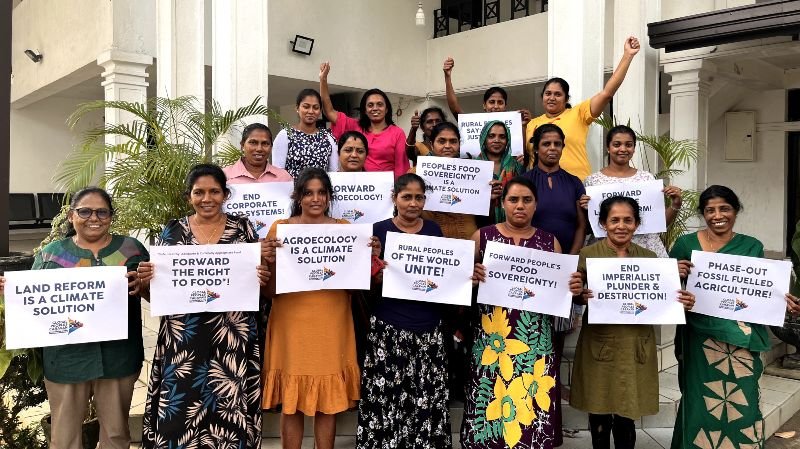
The founders of the Vikalpani Women’s Federation have a long history of organizing communities to resist unjust economic and agrarian reforms, including land grabbing for monoculture and the taxation of water; they mobilized and stood in solidarity with affected communities, protesting on roadsides and even in front of bulldozers to defend their land and livelihoods.
Vikalpani continues this legacy of resistance by organizing rural women against unjust policies such as the proposed Seed and Planting Material Act in 2014, which seeks to impose mandatory farmer registration and seed certification, posing a threat to traditional seed sovereignty.
In solidarity with broader justice movements, Vikalpani also supports the rights of the Malaiyaha community, whose roots in Sri Lanka date back over 200 years. The federation actively campaigns against the use of highly hazardous pesticides and agrochemicals, which have serious health impacts on rural populations, particularly women and children.
Combating sexual and gender-based violence is another central pillar of Vikalpani’s work. Vikalpani is consistently engaged in campaigns and advocacy efforts that challenge structural violence and promote the rights and dignity of women.
Vikalpani believes that rural women’s political ideologies are vital to understanding their lived realities and the layers of oppression they face, insights that fuel their resistance. Therefore, Vikalpani continues to carry out advocacy on pressing human rights, economic, and political issues, including the adverse effects of liberal economic reforms on rural communities.